We help businesses across different industries manage their systems, handle enquiries better, and keep everything running smoothly — without the usual tech headaches.
We help businesses across different industries manage their systems, handle enquiries better, and keep everything running smoothly — without the usual tech headaches.
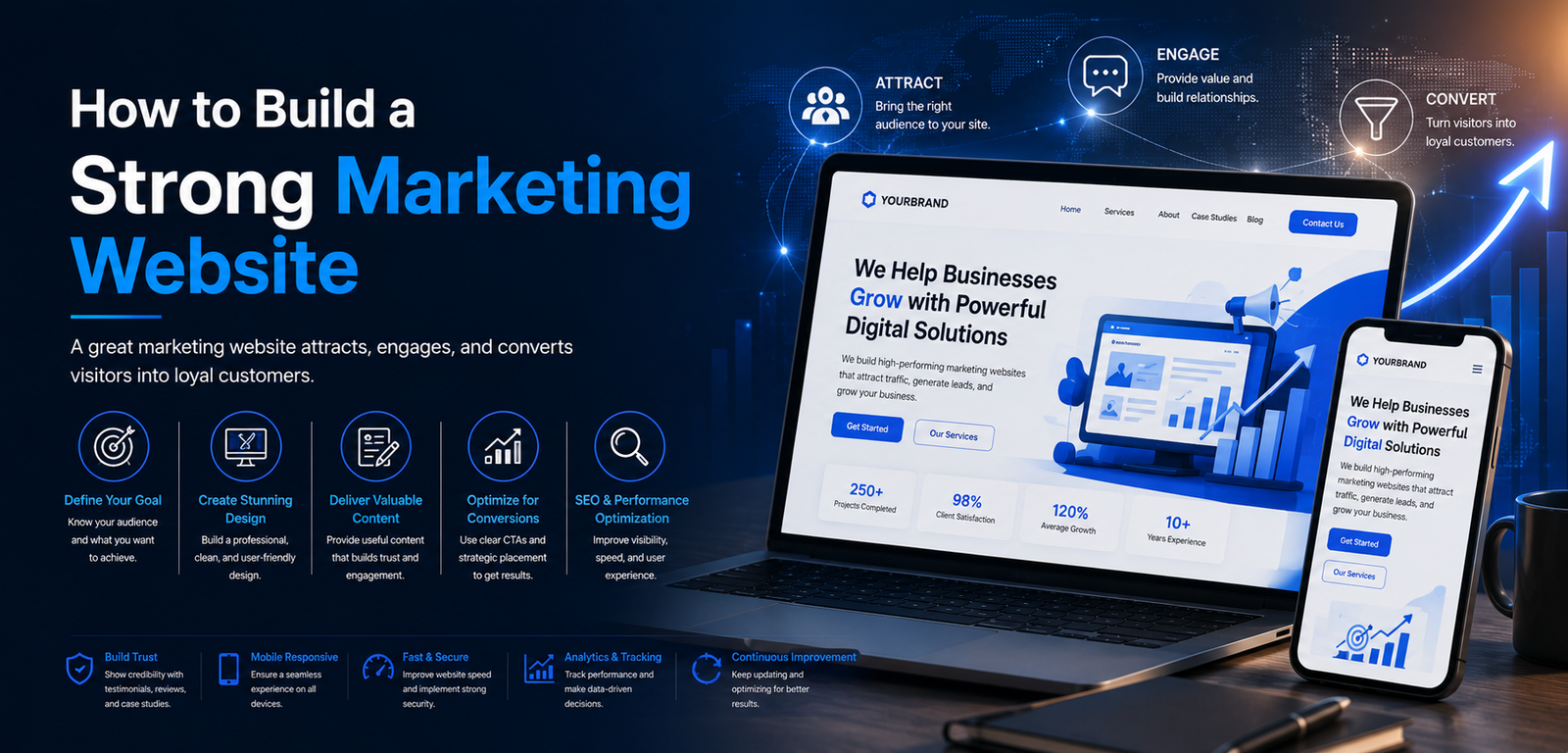
How to Build a Strong Marketing Website That Converts
Learn how to build a strong marketing website with clear messaging, SEO-friendly
structure, lead generation, trust elements, and high-converting pages.
Suggested Keywords: marketing website, website that converts, lead generation website, SEO website
design, business website strategy
A strong marketing website is designed to attract the right visitors and turn them into customers. It is not only
about design. It is about strategy, messaging, user experience, search visibility, and conversion. A good
marketing website explains what the business does, why it is valuable, and what action the visitor should
take next.
Before building a marketing website, the business must define what the website is supposed to achieve. The
goal might be to generate enquiries, sell products, book consultations, collect leads, promote services, or
build brand awareness.
Service pages are the foundation of a marketing website. Each main service should have its own page with
clear explanations, benefits, process, FAQs, and a call-to-action. This helps users understand the service
and helps search engines rank each page for relevant keywords.
For example, a digital agency should separate pages for web development, app development, SEO,
managed IT services, cloud computing, and AI solutions instead of putting everything on one page.
Use Clear Messaging
Visitors should quickly understand what the business offers. Avoid vague language and focus on customer
outcomes. Instead of only saying 'innovative digital solutions', explain how your service helps the customer
save time, improve visibility, increase enquiries, or reduce technical problems.
Add Trust Elements
Trust is essential for conversion. Customers need proof before they make a decision. A strong marketing
website should include reviews, testimonials, client logos, project examples, case studies, industry
experience, certifications, and clear contact details.
Trust Element
Purpose
Testimonials
Shows positive customer experience
Case studies
Proves real results
Portfolio
Displays quality of work
Certifications
Builds professional credibility
Team section
Makes the business feel human
Make Calls-to-Action Clear
A call-to-action tells visitors what to do next. Strong CTAs should be visible, specific, and repeated across
important pages. Examples include 'Get a Free Quote', 'Book a Consultation', 'Start Your Project', or
'Contact Our Team'.
Build for SEO from the Beginning
SEO should not be added after the website is finished. It should be included in the structure from the start.
This means using proper headings, keywords, internal links, meta descriptions, fast loading pages, mobile-
friendly design, and useful blog content.
Connect Blogs to Service Pages
Blog content helps answer customer questions and brings more search traffic to the website. Each blog
should link naturally to relevant service pages. For example, a blog about cloud computing should link to a
cloud services page, while a blog about professional websites should link to a web development page.
Track Performance and Improve
A marketing website should be measured regularly. Analytics can show which pages get traffic, which pages
generate leads, and where users leave. This data helps the business improve content, design, and
conversion rates over time.
Conclusion
A strong marketing website combines strategy, design, SEO, trust, and conversion. It should clearly explain
the business, guide visitors to take action, and support long-term growth through content and performance
tracking.
More Blog Post
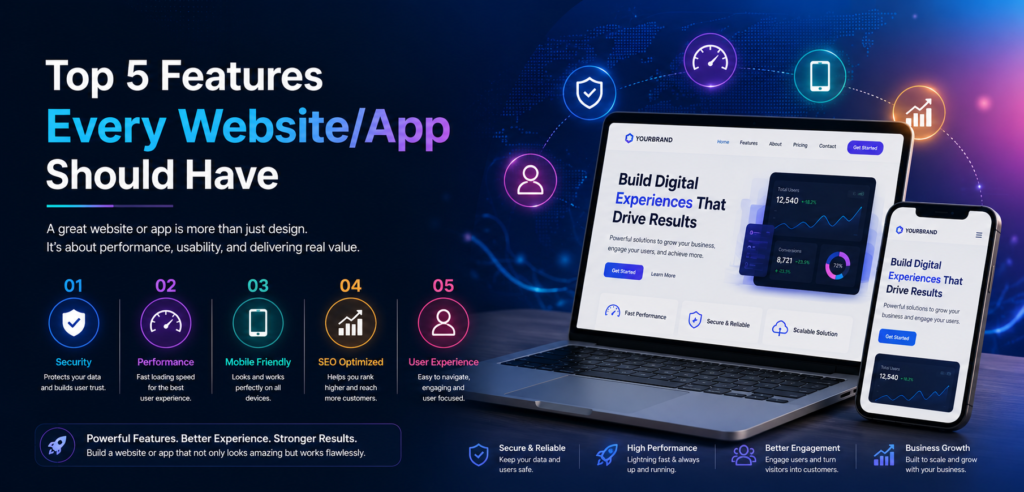
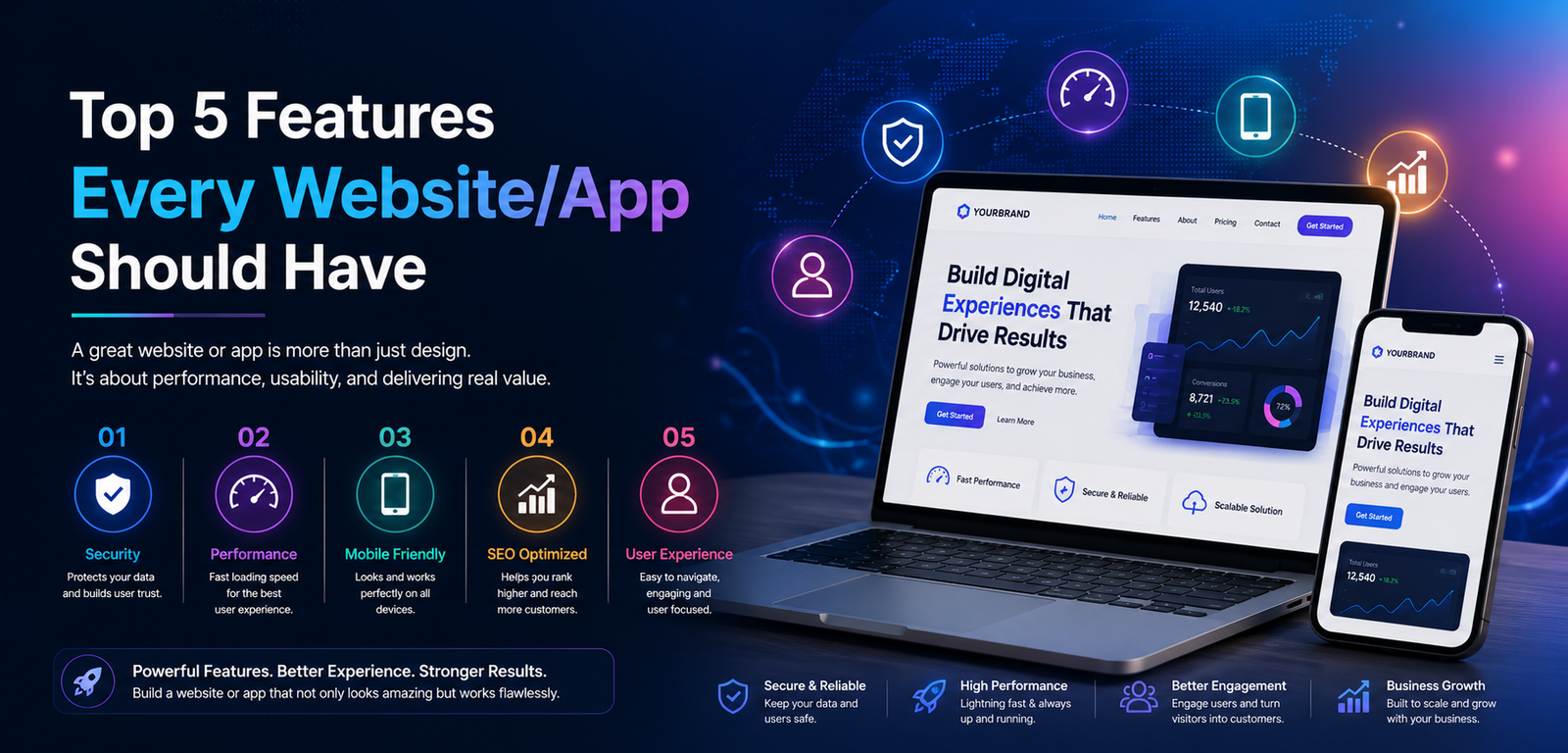
Top 5 Features Every Website/App Should Have
Explore the five essential features every modern website or app needs, including
responsive design, speed, security, user-friendly navigation, and analytics.
Why Every Small Business Needs a professional Website
Learn how to build a strong marketing website with clear messaging, SEO-friendly
structure, lead generation, trust elements, and high-converting pages.
Learn how multimodal AI is transforming healthcare, retail, finance, manufacturing,
education, and customer service by combining text, images, audio, and video.